DANIELLA BIANCHI
JULY 7TH, 2021
Pick your poison: Weed vs Alcohol
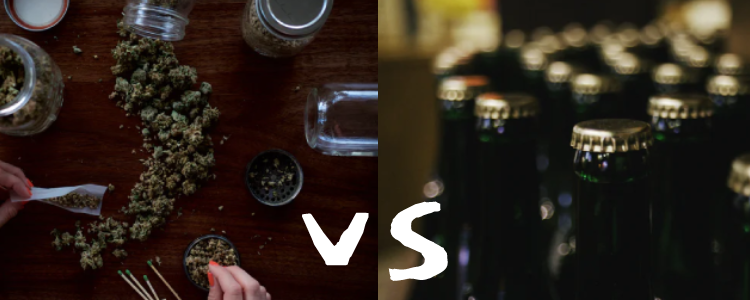
Alcohol and marijuana are two of the most widely used intoxicating substances on earth and there is always much debate on which of the substances is less harmful.
It is a complex question due to the two substances differing in legality, ingestion methods and long-term effects. Keep in mind that the effects of both substances are felt on an individual basis and several factors including height, weight, age, and more result in different outcomes. Also note that there is much more research on alcohol compared to weed (due to one being illegal in many counties). Let’s have a closer look and draw a comparison health-wise.
The National Institute on Drug Abuse found that alcohol consumption harms the brain and most body organs. The long-term effects of drinking heavily are well known leading to a lot of threatening issues such as alcoholic liver disease which can progress to liver cancer. The immune system can be compromised, the risk of cancer increased and fetal development is put at risk. It is well established in the medical field that alcohol is attributed to poor mental health and can exacerbate underlying mental health disorders. The National Alcohol Indicators (NAI) project, conducted by the National Drug Research Institute (NDRI) at Curtin University found that almost 6 000 Australians died from alcohol-attributable disease in a single year (2015). Binge drinking accounted for a large part of these deaths. I guess I have painted a rather bleak picture of something most of us consider our weekend buddy.
In comparison to alcohol, number of deaths caused by marijuana is almost zero. Using marijuana lends itself to impaired short-term memory, impaired motor coordination and with high doses, paranoia and psychosis. It is nontoxic and unlikely to cause death from overdose. In a 2014 study by the Society for the Study of Addiction, the fatal dose of TCH would be 15-70 grams. A typical joint has 0.5 grams and thus one would need to smoke 238-1113 joints in a day to overdose.
Yet this does not mean it is harmless. Users of marijuana have been found to have altered brain development (particularly when used by adolescents). Long-term users of marijuana may be at risk for problems with memory and learning later in life. There is a link between its frequent use by teens and increased risk of anxiety and depression. Marijuana can worsen psychiatric issues for people who are predisposed to them or bring them out at a younger age and due to it being typically smoked, it can bring on bronchitis, coughing and chronic inflammation of the air passages. Unlike alcohol, which slows your heart rate, marijuana speeds it up which could negatively affect the heart in the short-term. After looking at both substances so far, neither seem to make me excited to use them.
Here is the go
on which is the healthiest poison... It is a complex question due to the two substances differing in legality, ingestion methods and long-term effects. Keep in mind that the effects of both substances are felt on an individual basis and several factors including height, weight, age, and more result in different outcomes. Also note that there is much more research on alcohol compared to weed (due to one being illegal in many counties). Let’s have a closer look and draw a comparison health-wise.
Alcohol: General Risks and Information
With alcohol, the chemical compound, ethanol, enters the bloodstream and is transmitted throughout the body. As a result, inhibitions are reduced, coordination and judgement are impaired, speech is slurred and blackouts may occur. When you look at it from this scientific perspective, it makes us wonder why so many of us enjoy drinking, me included. Yet, in a similar way to marijuana, alcohol causes a rush of dopamine into the brain. A large review published in August in the medical journal, The Lancet, found that among people aged 15-49, alcohol use was the leading health risk factor across the globe in 2016, with 3.8% of all female deaths and 12·2% of all male deaths attributable to alcohol use.The National Institute on Drug Abuse found that alcohol consumption harms the brain and most body organs. The long-term effects of drinking heavily are well known leading to a lot of threatening issues such as alcoholic liver disease which can progress to liver cancer. The immune system can be compromised, the risk of cancer increased and fetal development is put at risk. It is well established in the medical field that alcohol is attributed to poor mental health and can exacerbate underlying mental health disorders. The National Alcohol Indicators (NAI) project, conducted by the National Drug Research Institute (NDRI) at Curtin University found that almost 6 000 Australians died from alcohol-attributable disease in a single year (2015). Binge drinking accounted for a large part of these deaths. I guess I have painted a rather bleak picture of something most of us consider our weekend buddy.
Cannabis: General Risks and Information
Cannabis continues to be the world’s most widely used illicit drug, with an estimated annual prevalence of 3.9% of the adult population aged 15–64 years, or the equivalent of 192 million people having used cannabis at least once in 2018 (AIHW). As marijuana is ingested (usually smoking or eat it), cannabinoids (chemicals) like THC, are released into the body. They get to the brain and attach to cannabinoid receptors which are activated to release dopamine (the high) associated with impaired thinking and slower reaction time. The variety of products for cannabis again make it difficult to get a full picture of its effects, as the way you consume it has a big impact - for example, smoking weed is rough on the air passageways but this is not a side effect with edibles.In comparison to alcohol, number of deaths caused by marijuana is almost zero. Using marijuana lends itself to impaired short-term memory, impaired motor coordination and with high doses, paranoia and psychosis. It is nontoxic and unlikely to cause death from overdose. In a 2014 study by the Society for the Study of Addiction, the fatal dose of TCH would be 15-70 grams. A typical joint has 0.5 grams and thus one would need to smoke 238-1113 joints in a day to overdose.
Yet this does not mean it is harmless. Users of marijuana have been found to have altered brain development (particularly when used by adolescents). Long-term users of marijuana may be at risk for problems with memory and learning later in life. There is a link between its frequent use by teens and increased risk of anxiety and depression. Marijuana can worsen psychiatric issues for people who are predisposed to them or bring them out at a younger age and due to it being typically smoked, it can bring on bronchitis, coughing and chronic inflammation of the air passages. Unlike alcohol, which slows your heart rate, marijuana speeds it up which could negatively affect the heart in the short-term. After looking at both substances so far, neither seem to make me excited to use them.